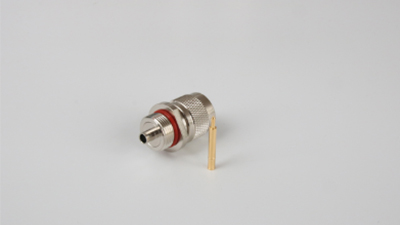
When PCB space is limited, choosing between MCX and MMCX connectors can affect both mechanical layout and RF performance. Both are compact coaxial connector families with snap-on mating, but they differ in size, mating interface, cable compatibility, and typical applications.
For engineers comparing MCX vs MMCX, the right choice should consider PCB space, mating requirements, impedance, frequency range, cable type, and installation method rather than connector size alone.
MCX vs MMCX Connectors at a Glance
MCX and MMCX are both designed for compact RF applications. MMCX generally has a smaller interface, while MCX provides a slightly larger form factor with a broad range of cable and PCB configurations.
| Factor | MCX | MMCX |
|---|
| Coupling | Snap-on | Snap-on |
| Typical impedance | 50Ω / 75Ω, depending on model | Commonly 50Ω |
| Relative size | Compact | More compact |
| Typical use | GPS, wireless modules, RF equipment | Compact wireless and portable equipment |
| Main consideration | Balance of size and configuration options | Space-saving design |
Actual performance depends on the specific part number, so family-level specifications should not replace product-level technical data.
Size, Mating Interface and PCB Space: What to Compare
Physical dimensions are often the first consideration when comparing MCX and MMCX.
MCX is designed as a micro-miniature coaxial connector and uses a snap-on coupling system. It can provide a useful balance between compact size and convenient mating.

MMCX takes miniaturization further and can be advantageous when PCB real estate is particularly limited.

When reviewing an MCX RF connectors solution, engineers should look beyond the connector body itself. PCB footprint, connector height, cable exit direction, mounting method, and clearance around the mating area can all affect the final layout.
For an MMCX RF connector, the smaller interface can help reduce space requirements, but the available mating components and cable configuration still need to match the application.
Are MCX and MMCX Connectors Interchangeable?
No. Although both commonly use snap-on coupling, MCX and MMCX have different mating dimensions and interfaces. They should not be treated as interchangeable simply because their connection methods appear similar.
This is particularly important when replacing an existing connector during a redesign. The replacement must match the mating interface, PCB footprint, cable termination, impedance, and electrical requirements.
If different connector families need to be connected, an appropriate adapter can provide the required transition. The adapter should be selected according to the exact male and female interfaces rather than by connector family name alone.
Electrical Specifications and Cable Compatibility to Verify
Mechanical compatibility is only one part of connector selection. Engineers should also verify the electrical specifications of the exact model.
Important parameters include:
For example, BRD's MCX product range includes PCB and cable configurations with different structures and specifications. Buyers should therefore use the individual product drawing and technical datasheet when confirming performance.
Cable compatibility is equally important. A connector may have the correct RF characteristics but still be unsuitable if its termination structure does not match the selected coaxial cable.
When to Choose MCX, MMCX or a Threaded Alternative
MCX can be considered when a compact snap-on connection is required while maintaining a broader range of mounting and cable configurations.
MMCX is worth considering when minimizing connector size and PCB occupancy is a major design requirement. It can be particularly useful for compact wireless equipment and space-constrained electronic assemblies.
A threaded connector may be more appropriate when mechanical retention is a higher priority. Buyers comparing SMA connector manufacturers should also evaluate the required interface, mounting style, cable configuration, frequency range, and mechanical environment before selecting an SMA solution.
SMA is therefore best treated as a specific alternative when a threaded connection is required, rather than as a direct replacement for every MCX or MMCX application.
What to Confirm with a Supplier Before Sampling
Before requesting samples, provide the supplier with enough information to identify the exact connector configuration.
Confirm:
Connector series and part number
Male or female interface
PCB, cable, panel, or bulkhead mounting
Straight or right-angle configuration
Cable type and diameter
Impedance and operating frequency
Required environmental conditions
Mating connector information
For buyers sourcing from a china mcx rf connector supplier, requesting dimensional drawings before sampling can help prevent PCB footprint and mating-interface problems. Sample testing should then verify both mechanical fit and RF performance.
Conclusion
The choice between MCX and MMCX depends on more than connector size. Engineers should compare the mating interface, PCB footprint, cable compatibility, electrical specifications, and installation requirements together. MCX offers a compact snap-on solution, while MMCX is designed for even tighter spaces. A threaded option such as SMA can be considered when stronger mechanical retention is required.
FAQ About MCX vs MMCX Connectors
Is MCX the same as MMCX?
No. They are separate connector families with different dimensions and mating interfaces, although both commonly use snap-on coupling.
Which is smaller, MCX or MMCX?
MMCX is generally the more compact connector and is commonly considered when PCB or equipment space is limited.
Can MCX connect directly to MMCX?
No. They are not directly interchangeable. An appropriate adapter or compatible cable assembly is required to connect different interfaces.
Are MCX and MMCX available in 50Ω versions?
Yes. Both connector families include 50Ω configurations. The impedance of the specific model should always be confirmed from its technical documentation.
When should I choose SMA instead?
SMA may be appropriate when a threaded connection and stronger mechanical retention are preferred, particularly where vibration resistance or secure mating is important.
What should I provide when requesting an MCX or MMCX sample?
Provide the connector type, mounting method, cable specification, impedance, frequency range, orientation, and environmental requirements. An existing mating-part drawing can also help the supplier confirm compatibility.
Allen Chen
Hi, I’m the founder & managing director of Baierde Electronic, Allen Chen, an expert in RF coaxial connectors, and I Initiated the current business venture in 2009.
Over 20 years of expertise in RF coaxial connectors, with hands-on proficiency spanning design, development, and high-volume manufacturing.
Leading high-performance teams to deliver 16 years of unbroken revenue growth, achieving $6+ million sales via strategic product positioning, optimized supply chains, disciplined cost management, and uncompromising quality standards.